




Walk into any shop these days and you’ll likely see a familiar scene: busy aisles, full baskets and a queue forming at the tills. But behind the hum of everyday retail lies a quiet revolution – one that’s transforming how businesses manage their operations, serve their customers and protect their margins.
That revolution is happening at the checkout, and it’s powered by smarter payments.
Payment systems have evolved from being a necessary utility to a strategic asset. In today’s competitive trading landscape – where margins are tight, customer expectations are high and operational efficiency is non-negotiable – getting payments right is essential.
The checkout as a business engine
For many retailers, the checkout is still viewed as the final step in the customer journey. But in reality, it’s the beating heart of the store. It’s where revenue is captured, customer experience is shaped and data is generated. And when payments are optimised, everything downstream – from reconciliation to staffing – runs more smoothly.
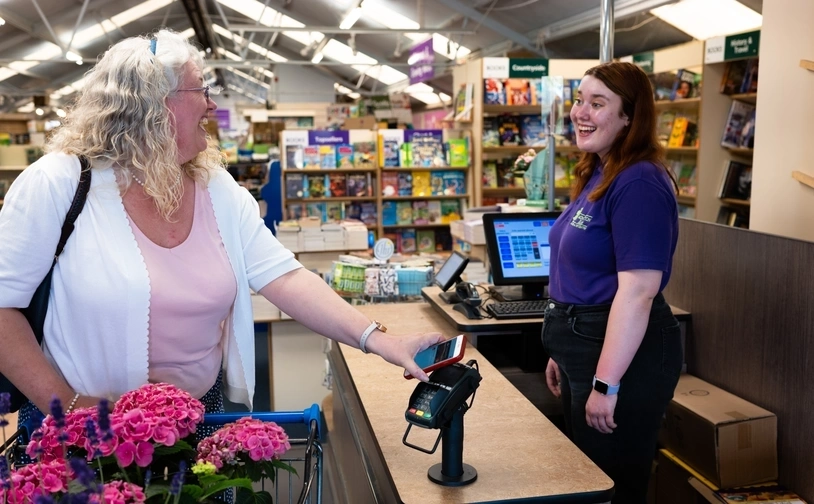
Modern payment terminals now do far more than accept cards. They integrate with point-of-sale systems, support contactless and mobile wallets, and enable real-time reporting. This means fewer errors, faster transactions and better visibility into what’s happening on the shop floor.
Take contactless payments, for example. In 2024, over 1.5 billion contactless point-of-sale payments were made in Irish shops, restaurants and other retail outlets – that’s 87% of all card payments. In the UK, some 95% of all in-store card payments under £100 were made using contactless in that year.
A tap-and-go transaction is not only faster – it’s also more hygienic, more secure and less prone to delays caused by chip and PIN or handling cash. For retailers, that translates into shorter queues, happier customers and more efficient staff deployment.

Reducing friction, gaining insights
One of the biggest pain points in retail is reconciliation – matching up what was sold with what was paid. Legacy systems often require manual intervention, which can lead to errors, delays and frustration.
But with integrated payment solutions, reconciliation becomes automatic. Transactions are logged in real time, matched to receipts and reported back to head office without the need for spreadsheets or late-night number crunching.
Not only does this kind of automation save time; it also reduces risk. When payments are processed and settled quickly, cashflow improves. When reporting is accurate, compliance becomes easier. And when staff aren’t bogged down by administration, they can focus on what really matters: serving customers.
Another often-overlooked benefit of modern payments is the data they generate. Every transaction tells a story about what was bought, when and how. When aggregated and analysed, this data can reveal patterns that help retailers make smarter decisions.
Want to know which times of day are busiest? Which products are most popular with mobile wallet users? Which tills are underperforming? Payments data can answer all of these questions and more.
Some retailers are even using payment data to inform staffing schedules, optimise inventory and tailor promotions. For example, if you notice that contactless transactions spike on Friday evenings, you might decide to run a targeted offer or increase staffing during that window. It’s about turning everyday transactions into actionable intelligence.

Enhancing the customer experience
Let’s not forget the customer. Shoppers want speed, convenience and choice. They want to pay with their phone, their watch or their loyalty app. And they want to feel confident that their data is secure.
Smarter payment systems support all of this. They enable digital wallets, tokenisation and biometric authentication. They allow for seamless refunds and split payments. And they integrate with loyalty programmes to reward repeat customers instantly.
The move away from cash seems unstoppable. In Ireland, some 70% of consumers use contactless regularly, and nearly 40% say they plan to use cards even more in future. In the UK, only 4.4 billion cash transactions were recorded in 2024, compared to 26 billion debit card payments.
For retailers, this means fewer abandoned baskets – whether that’s a shopper clicking out of an online checkout or, literally, walking away from a queue in-store and leaving their unbought goods behind.
A frictionless payment experience helps reduce those moments of hesitation, encouraging both impulse purchases and repeat visits. In a market where differentiation is hard to come by, offering a seamless way to pay can be a real competitive edge.
Now is the time to invest
In retail, costs are rising, competition is fierce and consumers are more demanding than ever. Making the most of your payments system offers a practical way to reduce costs, improve cashflow and stay competitive. But it’s not just about what happens at the till – it’s also about what happens after.
Fast, reliable access to funding can make a real difference. When settlements are prompt and predictable, retailers can plan with confidence, manage stock more effectively and respond quickly to seasonal demand or supplier changes.
Financial agility is especially valuable in retail, where margins are tight and timing is everything. Whether it’s securing a bulk discount or covering payroll during a busy week, having dependable access to funds can help you stay one step ahead.
Ultimately, it’s not just about speed – it’s about efficiency, insight and experience. It’s about turning a routine transaction into a moment of value. And it’s about building a store that’s not only fit for today, but ready for tomorrow. So, the next time you’re reviewing your operations, don’t overlook the checkout. It might just be the smartest place to start.
To learn more about optimising your payments system, get in touch.





Helping thousands of customers around the world grow their business through payments
Customer service and support
We’re here to help!
Customer service: 0818 20 21 20
Telephone: Monday to Friday, 8am to 5pm
Chat: Monday to Friday, 8am to 6pm
Elavon technical support: 0818 20 21 20
24 hours a day, 365 days a year
Opayo product support: 01 240 8731
24 hours a day, 365 days a year
Copyright© 2026 | U.S. Bank Europe DAC. Registered in Ireland – Number 418442. Registered Office: Block F1, Cherrywood Business Park, Dublin 18, D18 W2X7, Ireland.
U.S. Bank Europe DAC, trading as Elavon Merchant Services, is regulated by the Central Bank of Ireland.
We are regulated by the Central Bank of Ireland for our acquiring, transaction risk analysis, and dynamic currency conversion services. For all other products and services we provide, please note the following:
Warning: The provision of this service does not require licensing, registration, or authorisation by the Central Bank of Ireland, and as a result is not covered by Central Bank of Ireland rules designed to protect consumers or by a statutory compensation scheme.
Helping thousands of customers around the world grow their business through payments
Customer service and support
We’re here to help!
Customer service: 0818 20 21 20
Telephone: Monday to Friday, 8am to 5pm
Chat: Monday to Friday, 8am to 6pm
Elavon technical support: 0818 20 21 20
24 hours a day, 365 days a year
Opayo product support: 01 240 8731
24 hours a day, 365 days a year


Copyright© 2026 | U.S. Bank Europe DAC. Registered in Ireland – Number 418442. Registered Office: Block F1, Cherrywood Business Park, Dublin 18, D18 W2X7, Ireland.
U.S. Bank Europe DAC, trading as Elavon Merchant Services, is regulated by the Central Bank of Ireland.
We are regulated by the Central Bank of Ireland for our acquiring, transaction risk analysis, and dynamic currency conversion services. For all other products and services we provide, please note the following:
Warning: The provision of this service does not require licensing, registration, or authorisation by the Central Bank of Ireland, and as a result is not covered by Central Bank of Ireland rules designed to protect consumers or by a statutory compensation scheme.

Essential cookies enable core functionality such as page navigation and access to secure areas. The website cannot function properly without these cookies; they can only be disabled by changing your browser preferences. Please see our Cookie Policy for further information.
Performance cookies help us to improve our website by collecting and reporting information on its usage (for example, which of our pages are most frequently visited).
These cookies and similar technologies gather information about your browsing habits. They remember that you've visited a website and share this information with other organisations, such as advertisers and platforms on which we advertise. They do this in order to provide you with advertisements that are more relevant to you and your interests. These cookies and similar technologies gather information about your browsing habits. They remember that you've visited a website and share this information with other organisations, such as advertisers and platforms on which we advertise. They do this in order to provide you with ads that are more relevant to you and your interests.
Find out more about cookies on https://www.allaboutcookies.org